

The Chairman of the Governing Council of the Kwame Nkrumah University of Science and Technology, Kumasi (KNUST), Akyamfour Asafo Boakye Agyemang-Bonsu, has called for stronger collaboration among government, industry, regulators, alumni and development partners, saying the University's strategic vision under PLAN 2K35 can only be realised through collective action.
Speaking as Special Guest of Honour at the grand durbar marking the Silver Jubilee of KNUST's Department of Herbal Medicine, he said achieving excellence in research, innovation, sustainability and industry collaboration requires broad stakeholder support to position herbal medicine as a driver of healthcare delivery and economic growth.
"A vision as grand as our PLAN 2K35 can never be achieved by the University alone," he said.
He appealed to government and regulatory institutions to strengthen standards and create pathways for validated herbal medicines to become part of Ghana's national healthcare system.
"To our Government and our regulators, let us labour hand in hand to build the standards and the pathways that bring safe, validated herbal medicines into our national health system," he said.
The Council Chairman also urged industry and investors to seize opportunities within Ghana's expanding herbal medicine sector.
"To our captains of industry and our investors, I say: here before you is a frontier of enormous promise; come and build it with us," he said.
He said the Department's work aligns closely with PLAN 2K35 by advancing research excellence, innovation and sustainability while addressing pressing societal needs.
"Our research must solve the real problems of the Ghanaian people," he said.
Describing the Department as a testament to KNUST's commitment to preserving Africa's traditional knowledge through scientific inquiry, Akyamfour Asafo Boakye Agyemang-Bonsu drew on the Akan philosophy of Sankofa to argue that institutionalising herbal medicine education was not a return to the past but a deliberate effort to build the future on evidence and scholarship.
"To insist upon evidence is not to distrust our heritage. It is to defend it," he said. "When we establish the safety, standardise the dosage and demonstrate the efficacy of traditional remedies, we give that wisdom a passport to the pharmacies, hospitals and markets of the world."
He said growing international recognition of evidence-based traditional medicine presents significant opportunities for Ghana, whose biodiversity and indigenous medicinal knowledge could drive healthcare delivery, research, industrialisation and economic growth.
"Ghana is blessed with an extraordinary botanical inheritance," he said. "Our forests and grasslands hold a pharmacy that our ancestors once read fluently. Yet for far too long we have exported our raw wealth and imported our medicines, sending out our plants and our knowledge cheaply, and buying back finished remedies dearly."
He urged stakeholders to prioritise Ghana's "bio-sovereignty" by protecting indigenous knowledge and ensuring local communities benefit from their traditional medicinal resources.
"We should discover, validate, standardise and manufacture our own medicines here, on our own soil, and by our own hands," he said.
According to him, achieving bio-sovereignty requires sustained investment in laboratories, regulatory systems, product development and manufacturing capacity.
"In securing our bio-sovereignty, we secure our health, we secure honest work for our young people, and we secure a measure of our economic independence," he said. "And KNUST is the institution in this country that is better placed to lead that work."
Addressing faculty and students, he urged them to uphold the highest standards of scientific integrity while preserving indigenous medicinal knowledge.
"Guard your standards jealously. The credibility you have built across twenty-five years is a treasure beyond price," he said. "Deepen your science, so that every claim you make can withstand the sternest scrutiny the world can offer. Honour custodians of our indigenous knowledge; go out to the villages, sit patiently with the elders, record faithfully what they know, and secure for them the dignity and the benefit they are owed."
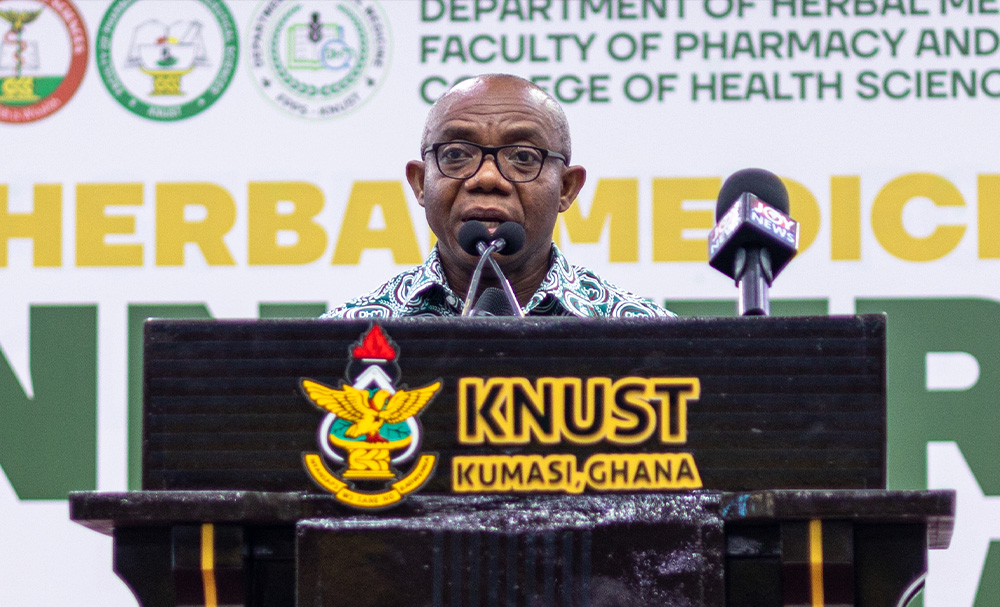
Provost of the College of Health Sciences, Professor Christian Agyare, outlined the College's vision of expanding the Department of Herbal Medicine into a School of Traditional Medicine to accommodate broader areas of traditional healthcare practice.
"We would like to see that the department in the next 20-30 years is able to migrate to a School of Traditional Medicine, where we will have the different aspects of traditional medicine," he said.
Professor Agyare said increasing global interest in natural products presents significant opportunities for Ghana's herbal medicine sector, noting that KNUST's programme has attracted international recognition and collaborations with institutions across Africa seeking to learn from the University's experience.
He added that the College would continue to strengthen postgraduate training and professional development to equip practitioners with advanced knowledge and skills.
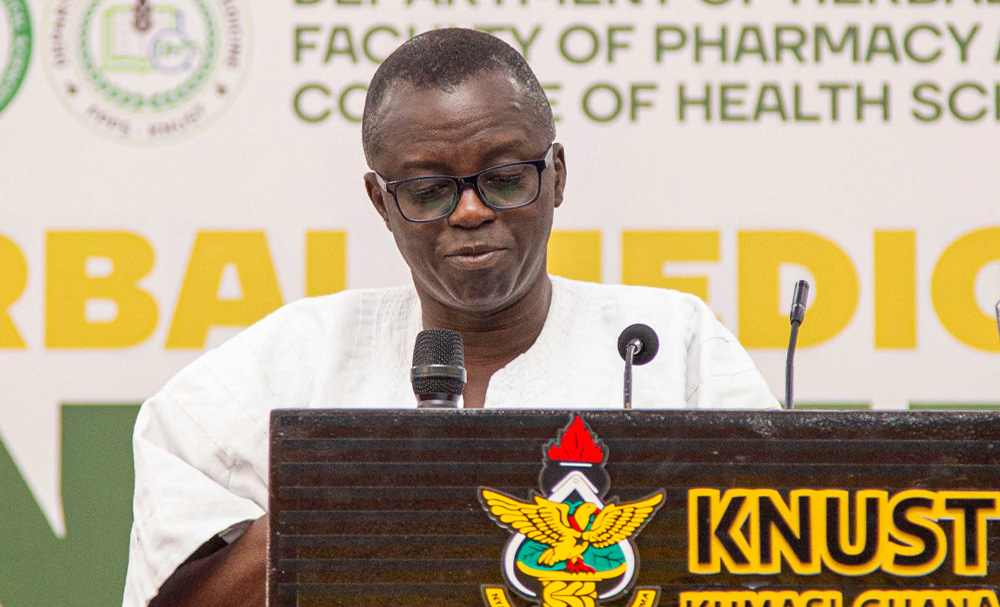
Representing the Minister of Health, Dr. Daniel Amaning Danquah, Deputy Registrar (Operations) at the Pharmacy Council, reaffirmed the government's commitment to strengthening evidence-based herbal medicine through research, regulation and industry partnerships.
He commended the Department for its 25 years of advancing indigenous healthcare knowledge through science and research, saying the future of herbal medicine must be anchored on evidence, safety, quality assurance and stronger collaboration among academia, regulators, industry and practitioners.
"Our vision is not to replace conventional medicine, but to build an integrated healthcare system where every intervention is guided by evidence, safety, effectiveness and quality standards," he said.
Dr. Amaning Danquah urged researchers to translate scientific discoveries into commercially viable products.
"Research must increasingly be translated into products. Products must become industries, and industries must create jobs and improve people's lives," he said.
Delivering the keynote address, Professor Regina Appiah-Oppong of the Noguchi Memorial Institute for Medical Research, University of Ghana, described herbal medicine as a major economic asset, saying Ghana's rich biodiversity represents "green gold" with the potential to drive innovation, create jobs and expand exports.
"Herbal medicine is not only a healthcare opportunity but also an economic asset. Ghana is sitting on green gold that can support industries, create jobs and contribute to national development," she said.
She added that scientific validation, investment, sustainable harvesting, strong regulation and collaboration among stakeholders are essential to building a globally competitive herbal medicine industry.
The anniversary celebration, held under the theme, "25 Years of Advancing Herbal Medicine Education and Research: Strengthening Evidence-Based Practice for Global Health and Sustainable Development," concluded with the presentation of commemorative awards to Akyamfour Asafo Boakye Agyemang-Bonsu, Professor Christian Agyare, Professor Regina Appiah-Oppong and other distinguished practitioners and professional bodies.
Story: Abigail Ofori Photos: Isaac Kwaku Duah


